
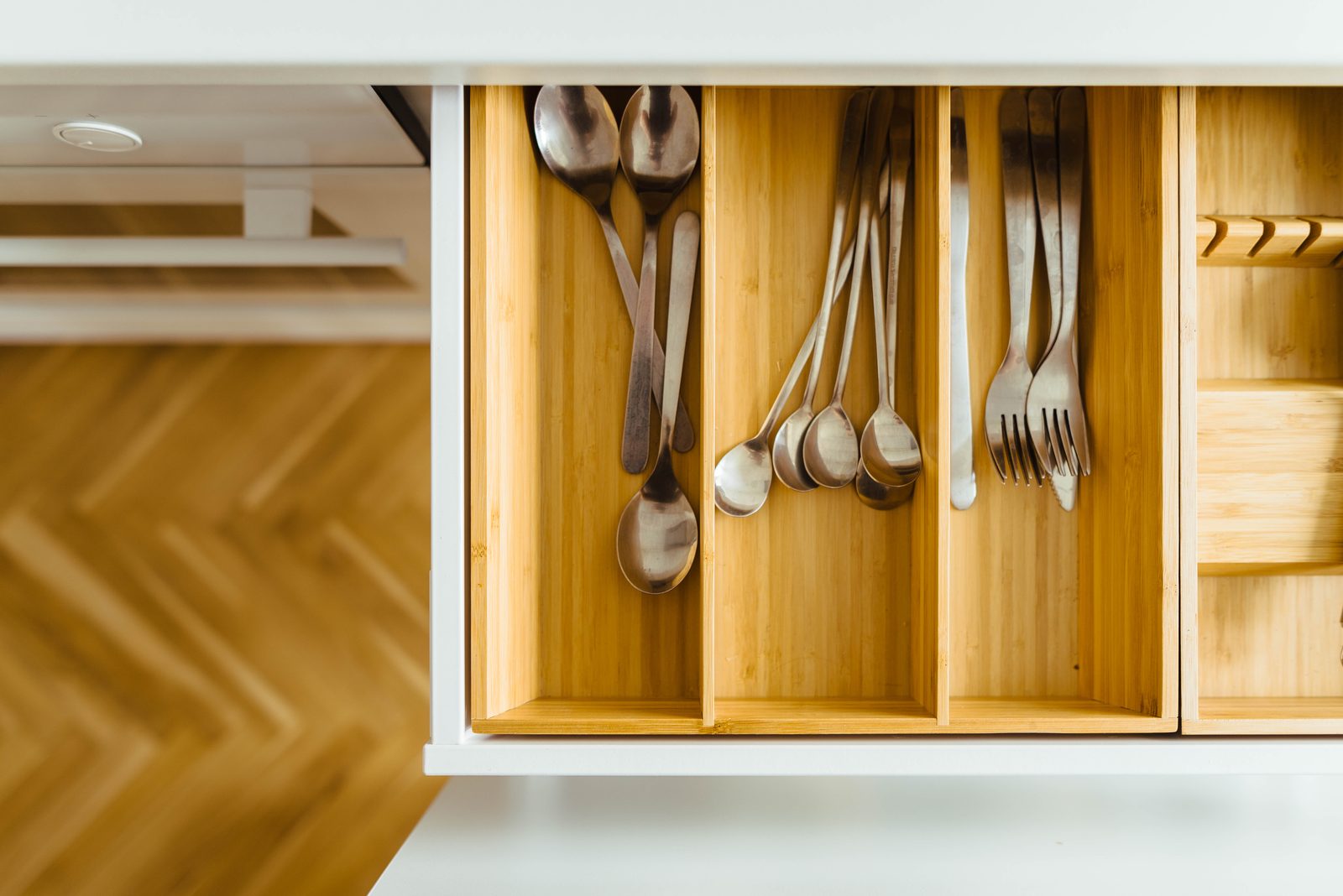
Drawers Take the Most Abuse
Think about which part of your cabinets you touch the most. It is not the upper doors — it is the drawers. Every meal, every cleanup, every time you need a utensil, a pot, or the trash: hands on the drawer fronts. They collect the grease, the fingerprints, the bumps and chips. In many kitchens the doors still look passable while the drawer fronts are clearly worn out. Replacing just the fronts — or including them in a bigger project — fixes the part that shows the most wear.
Drawer front replacement swaps the visible front panel of each drawer while keeping the drawer box behind it. The box — the part that holds your silverware — stays. Only the face you see and touch gets replaced, in the style and finish that matches your new doors.
What We Check First
Before we quote drawer fronts, we check the drawer boxes and slides. Open a few drawers and feel how they move. If the boxes are solid and the slides work — even if they are old — new fronts are a straightforward win. If drawers stick, fall off their tracks, or the boxes are coming apart, we will tell you. Sometimes the fix is new slides along with the fronts, which we can do. Sometimes the drawers themselves are shot, and new fronts on failing drawers would be lipstick on a problem. We check, we tell you what we find, and then you decide.
Fitted to Your Drawers
Like doors, drawer fronts are made to measure. We measure each drawer opening and build fronts to fit, with the right overlay — the amount the front covers the frame — so the gaps line up with your doors. In older homes, drawer openings can vary slightly from drawer to drawer, so we measure each one rather than assuming they match. The result is drawer fronts that sit even and flush, opening and closing cleanly.
We also handle the attachment. Drawer fronts fasten to the drawer box from inside with screws, positioned so the front sits square. Get the positioning wrong and the front sits crooked forever. We fit each front, check the alignment against the neighboring doors, and then fasten it. Fussy, but it is the difference between drawers that look built-in and drawers that look stuck on.
New Slides: Worth Considering
While we are replacing fronts, many homeowners upgrade the drawer slides — the metal tracks the drawer rides on. Old slides are often the reason drawers stick, slam, or will not stay closed. New soft-close slides let a drawer glide shut silently with a push, and full-extension slides let the drawer come all the way out so you can reach the back. If your drawers are hard to open or you are tired of the slam, new slides change the daily experience more than any finish choice. Ask about it during the visit — it is a natural add-on while the fronts are off.
Matching Your Doors
Drawer fronts and doors should look like they were born together. When we do a full cabinet refacing or door replacement, the drawer fronts are built in the same style and finish as the doors — same Shaker profile, same paint color, same everything. Standalone drawer front replacement, where the doors stay as they are, takes more judgment: we match the existing door style and finish as closely as possible so the drawers do not look like an afterthought.
How It Works: Our Process
Step 1 — Free visit. We check your drawer boxes, slides, and openings, and confirm front replacement is the right fix.
Step 2 — Choices and measuring. Front style, finish, and whether to upgrade slides. Each drawer measured.
Step 3 — Written estimate. Fronts, slides if you want them, and labor. Every project is different — contact us for a free written estimate.
Step 4 — Install day. Old fronts off, new fronts fitted and fastened, slides upgraded if chosen. Most kitchens take a day.
Step 5 — Walkthrough. We open and close every drawer with you before we leave.
The Details People Notice
After a drawer front replacement, the things people comment on are rarely the fronts themselves — they are the feel. Drawers that glide instead of sticking. Fronts that line up in a clean row instead of sitting at slightly different heights. No more chipped edges catching your sleeve. It is a small project that you interact with dozens of times a day, which is why it punches above its weight.
Care Is Simple
Drawer fronts get touched constantly, so wipe them when you wipe the counters — a damp cloth with mild soap handles fingerprints and cooking film. Avoid letting water sit along the bottom edge of the fronts, and do not use abrasive cleaners. That is it.
Call (301) 679-9193 or send the form below for your free on-site estimate.